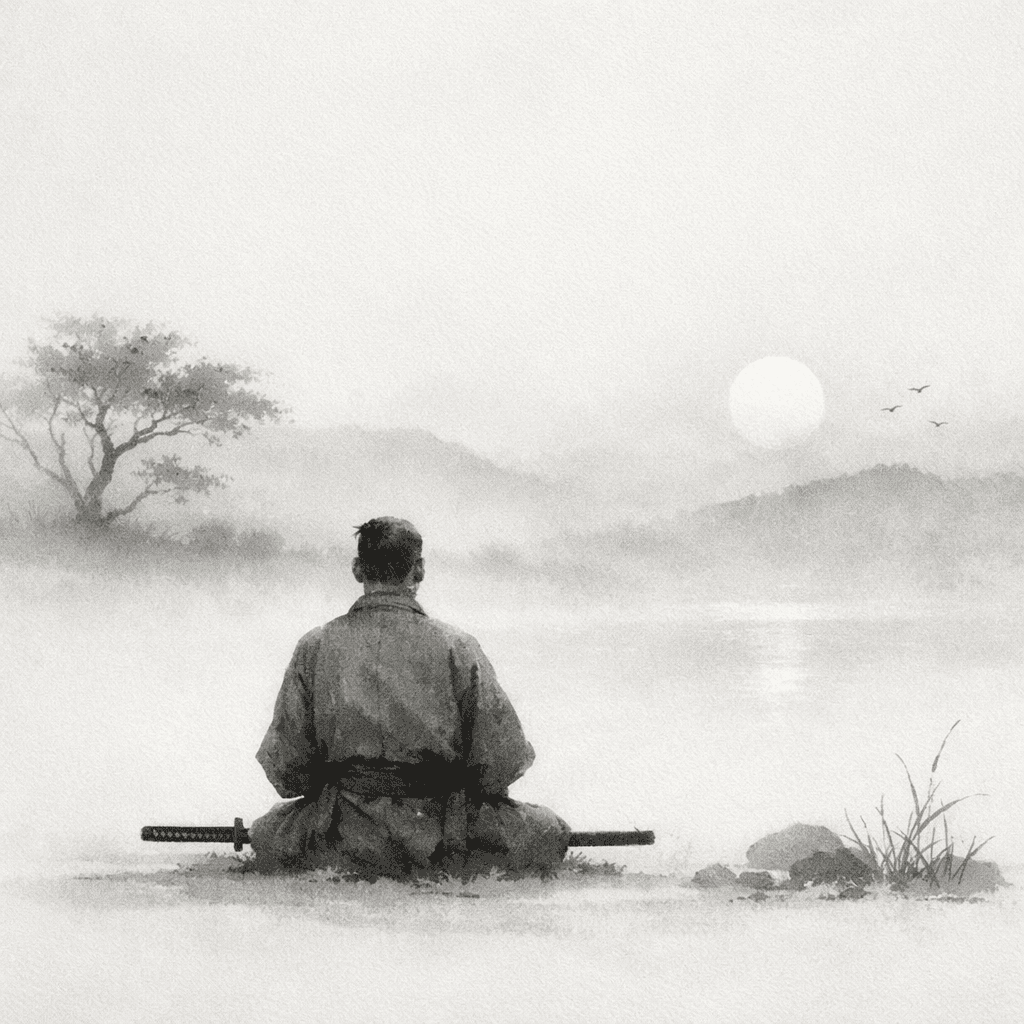
Lessons from Tsukahara Rengetsu (塚原 蓮月) — An imaginary samurai master
Lesson 1
Sit quietly for a moment.
Imagine a young retainer standing at the gate before dawn. Mist hangs low over the earth. His robe is simple. His sword is clean. Nothing remarkable distinguishes him from a hundred other men.
Yet inside him there is turmoil.
He wonders:
Will I succeed?
Will I fail?
Will I survive today?
What will others think of me?
His teacher, Rengetsu, watches him and says only this:
“You are tired because you are still choosing.”
The young man does not understand.
“In the morning, decide that you are already dead.”
The young man still does not understand. He thinks Rengetsu speaks of violence or fatalism.
He does not.
He speaks of freedom.
A man who fears loss hesitates.
A man who protects his reputation becomes false.
A man who clings to comfort cannot act cleanly.
But the one who has already accepted loss moves without friction.
If you have already accepted embarrassment, you can speak honestly.
If you have already accepted hardship, you can train daily.
If you have already accepted death, you can live fully.
The samurai’s first discipline is not swordsmanship.
It is decision.
Each morning, the warrior settles his mind before the world demands action. He removes negotiation with fear before the day begins. Then action becomes simple.
Not easy.
Simple.
“Today, your practice is small.” directs Rengetsu.
“When you wake, before seeking information, before planning your work, before discussions with others, sit upright and say quietly:
‘I accept difficulty today. I accept discomfort today. I accept that things may not go my way.‘
Do not dramatize it. Do not make ceremony of it. Just decide.
Then stand up and begin your day as one who no longer bargains with reality.
This is the first gate of Budo.”